Detection Technology
Six specialist methods. We choose the right combination for your specific leak — and we don't open a single wall until we know exactly where the problem is.
Most leak detection companies rely on one or two methods. We carry the full toolkit. Each method has strengths and limitations depending on pipe type, building construction and leak severity — so we assess first and deploy the right technology, not the first one to hand. In most cases we combine two methods to cross-confirm the location before recommending any access work.
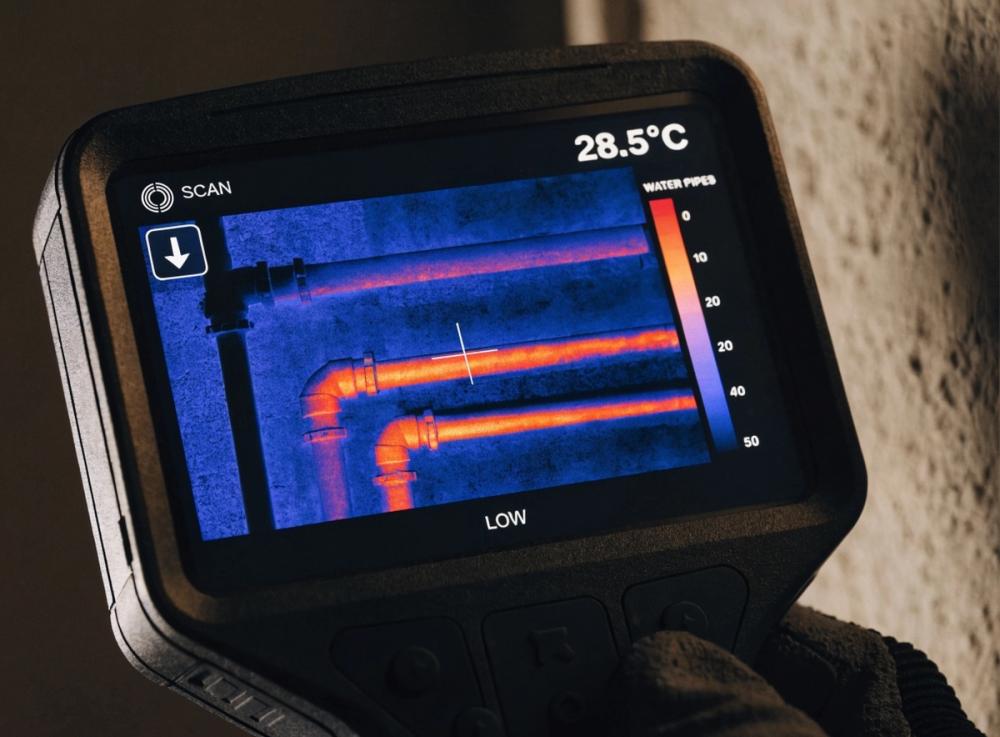
Thermal Imaging
Thermal cameras detect the heat differential created by escaping water. Completely non-contact and non-destructive — we scan ceilings, walls and floors in minutes and pinpoint the anomaly without touching a surface.
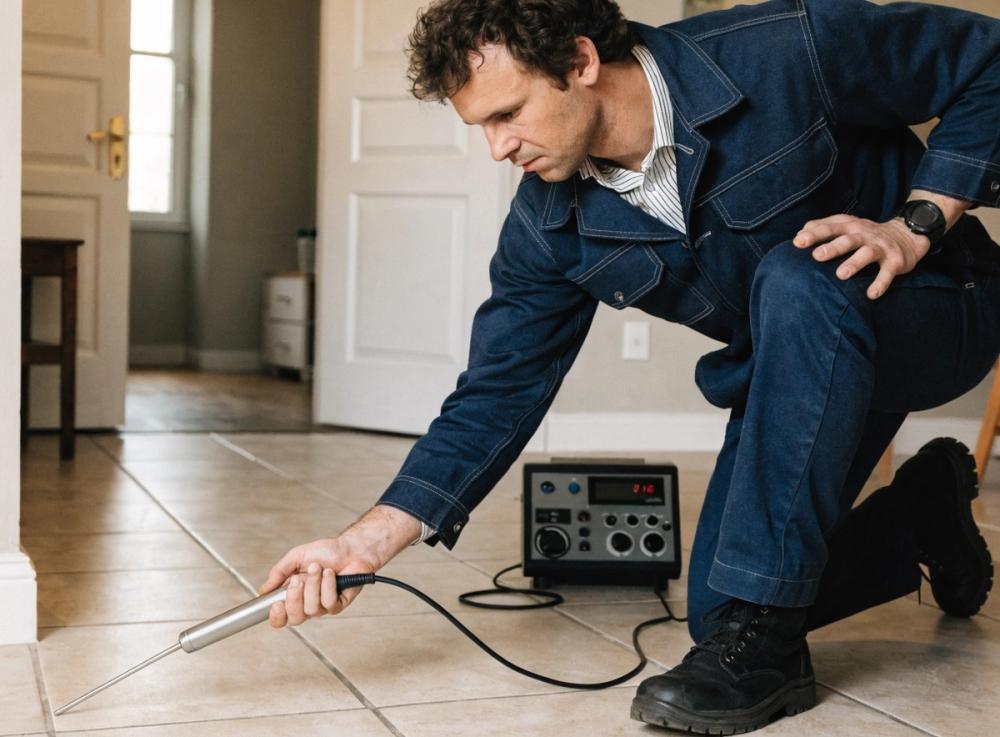
Tracer Gas Detection
A safe, inert hydrogen-nitrogen mix is introduced into the pressurised pipe. Because the molecules are tiny, the gas permeates through concrete, screed and soil and is detected at the surface with a sensitive electronic probe — accurate to within centimetres.
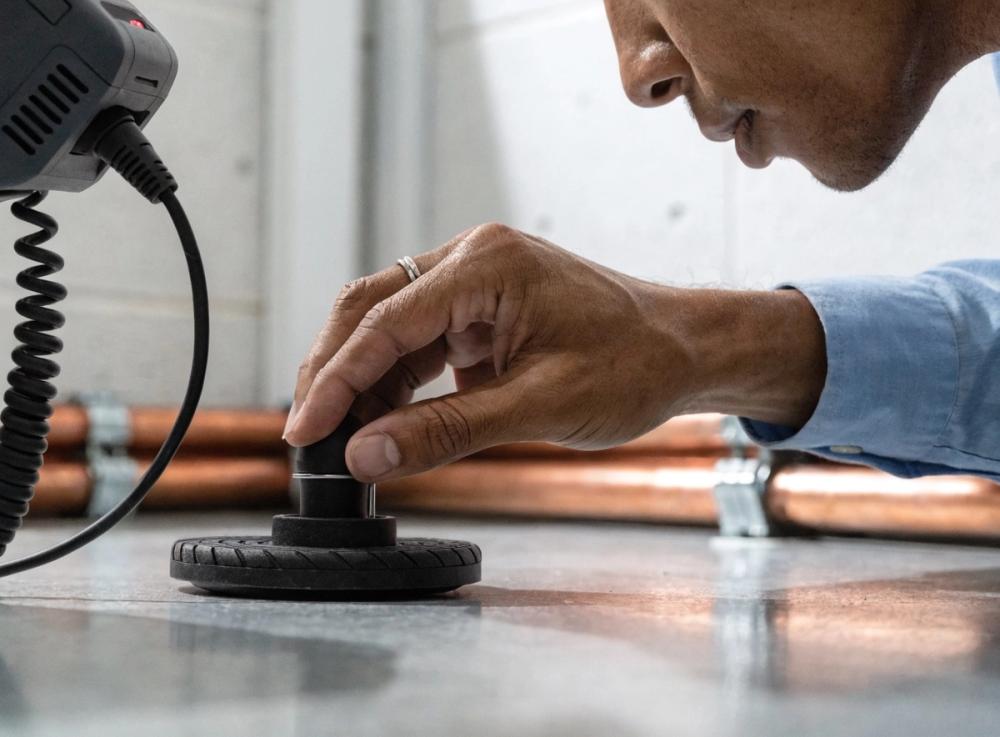
Acoustic Detection
Water escaping under pressure creates a distinctive sound signature. Acoustic correlators and ground microphones amplify and triangulate that signal across the pipe run, letting us locate the escape point without any excavation or access.
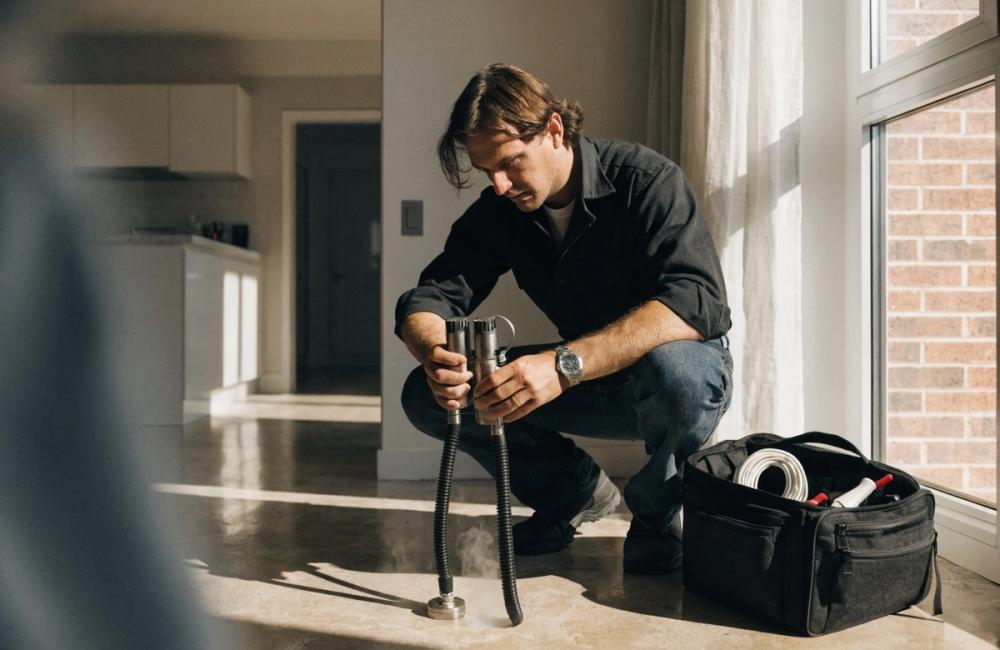
Endoscopic Camera
A flexible fibre-optic camera is inserted into a pipe or void space to visually confirm damage, blockage or corrosion. Used when other methods have located the approximate zone and a visual record is needed — especially useful for drain and waste pipes.
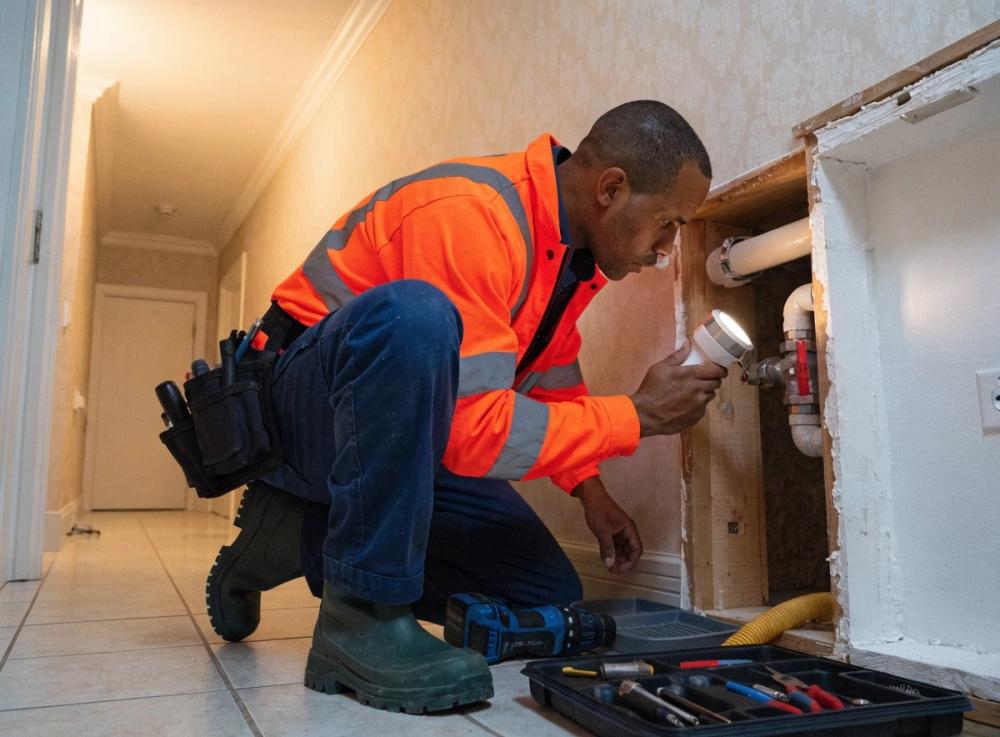
Moisture Meter
Calibrated moisture meters measure the saturation level in plaster, timber, screed and masonry. Used to map the extent of water ingress, confirm that drying is complete after remediation, and differentiate between leak-related damp and condensation.
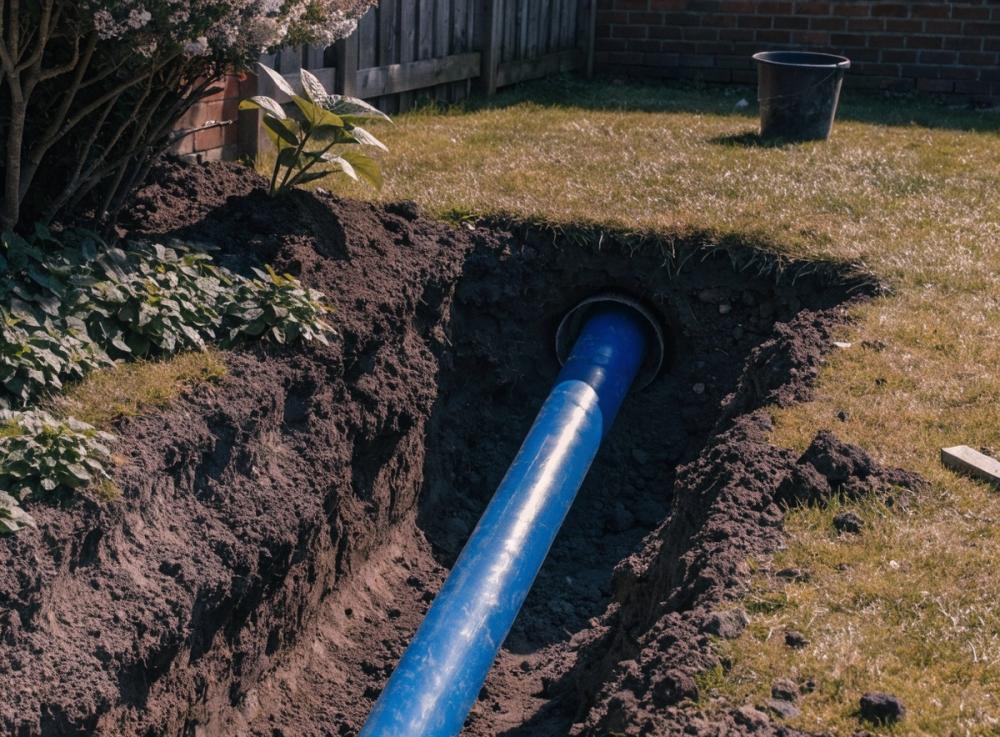
Pressure Testing
Individual circuits are isolated and pressurised with nitrogen. Pressure drop confirms a breach and — by isolating sections — narrows its location. Used to confirm a leak exists before deploying more sensitive methods, and to verify a repair has been successful.
Why Multiple Methods?
A single method can be fooled — thermal imaging won't work on pipes that haven't been running, and acoustic detection struggles through certain floor constructions. Combining methods gives us independent confirmation of the same result before we recommend any access work.
- 1Assess
We review the symptoms, building type and pipe layout before choosing any equipment.
- 2Detect
We deploy one or more methods to identify the source zone, typically narrowing to within 10–30cm.
- 3Confirm
A second method cross-checks the result before we mark the repair point — no guesswork.
- 4Report
A written report with findings and photographs is issued — suitable for insurance claims.
Technology FAQs
Not sure which method applies to your situation? These are the questions we get most often about how leak detection actually works.
Will you damage anything to find the leak?
No — our detection methods are entirely non-destructive. Thermal cameras, tracer gas probes and acoustic sensors work from the surface. We do not open walls, lift floors or break tiles during the investigation. Any access work only happens once the exact leak point is confirmed and agreed with you.
Which method is most accurate?
Tracer gas is typically the most precise — it can locate a leak to within a few centimetres through concrete and screed. However, accuracy depends on the leak type and conditions. For inter-floor and flat roof leaks, thermal imaging often gives the clearest result. We assess first and choose accordingly, then cross-confirm with a second method where possible.
Is tracer gas safe?
Yes. We use a mixture of 95% nitrogen and 5% hydrogen — both inert, non-toxic, non-flammable and safe in enclosed spaces. The gas disperses quickly and leaves no residue. It has been used in leak detection for decades and is the industry standard for precision pipe tracing.
Can you detect a leak if it's not currently active?
It depends on the method. Thermal imaging requires the pipe to be running — a cold pipe won't show a temperature differential. Tracer gas and pressure testing work independently of whether the leak is actively flowing at the time of inspection. If you're unsure, call us and we'll advise which methods are appropriate.
How long does a leak detection visit take?
Most standard domestic investigations take 1 to 3 hours on-site. More complex properties — larger floor plans, multiple pipe circuits, or difficult access — may take longer. We'll give you an estimated duration when you book, along with a clear price.
Do you carry out repairs as well as detection?
Yes. For most leak types our engineers can carry out the repair on the same visit. Where specialist trades are needed — for example, structural drying or drain lining — we coordinate with trusted partners and manage the process end to end.
GOT A LEAK?
WE'RE READY.
Same-day and emergency appointments available across London and the South East. Most leaks found and fixed in a single visit.